Hair transplant risks: what can happen and how often
A hair transplant is a minor procedure, but it is surgery. Most after-effects are harmless and go away by themselves. Serious complications are rare, but they happen. What studies say and what you can influence yourself.

Key points
- In two large case series the overall complication rate was 1.2 % and 4.7 %. Serious complications are rare with experienced teams.
- Swelling, crusts, numbness and temporary hair shedding are common and usually resolve on their own.
- Many risks depend on planning: a hairline set too low, over-harvesting the donor area, smoking. You can clarify these beforehand.
Not medical advice
Trichio is a comparison site, not a medical practice, and we are not doctors. This guide summarises studies in general. It is not medical advice. What is right for you is something to discuss with a doctor.
How common complications are
A review from Harvard analysed 43 publications on complications of FUE and FUT. Two large case series found an overall complication rate of 1.2 % and 4.7 %. The authors write that serious complications are rare with experienced teams.
Many studies describe complications with varying precision, though. For some effects such as crusting or folliculitis, figures range from a few to over 50 %. The numbers below are maximum values from individual studies, not averages.
Common, mostly harmless effects
- Crusts and redness at every graft: almost always; they come off within the first one to two weeks.
- Swelling of the forehead and eyes: in some studies in up to half of patients, usually between day two and four.
- Spots around the new hairs (sterile folliculitis): common as hairs grow through the skin, usually harmless.
- Numbness at the back or top of the head: often for some weeks to months, in some studies persistent in up to 11 %.
- Temporary shedding around the treated areas (shock loss): in studies in up to 6.5 % at the recipient and 4.1 % at the donor area. The hair usually grows back.
Real offers show who operates at a clinic and how it plans your case.
Which area bothers you most?
One tap is enough, then you move on to your photos.

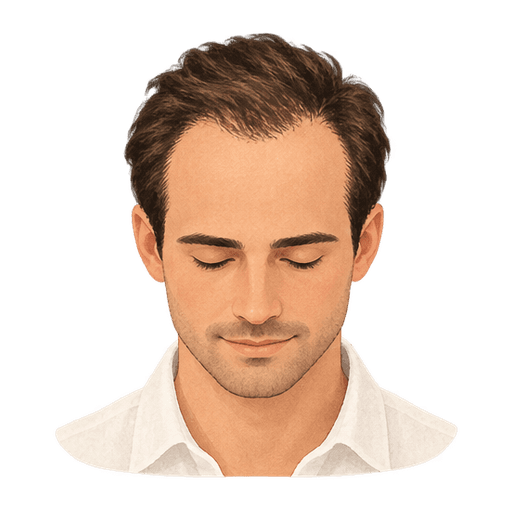
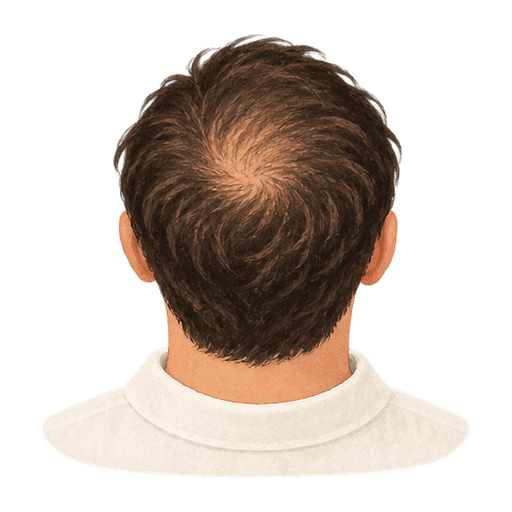
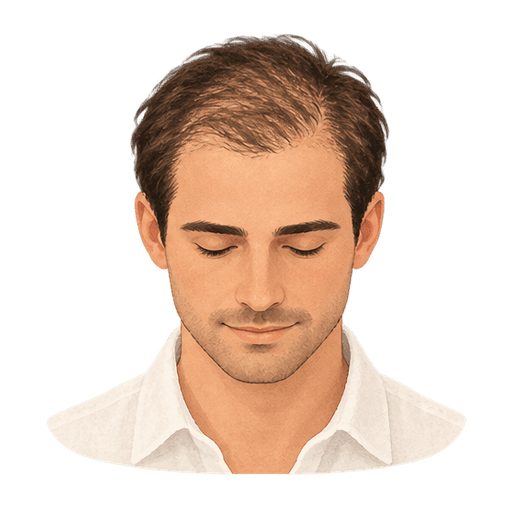
Your name stays with you until you choose a clinic.
Start without choosingRare, serious complications
- Infection: in some studies up to 11 %, usually treatable with antibiotics. Severe infections have been described very rarely.
- Bleeding that needs treatment: in some studies up to 8 %.
- Death of skin in the recipient area (necrosis): rare. In a case series from Istanbul with 18 people affected, two thirds had smoked.
- Raised scars or keloids: after the strip method (FUT) in up to 15 % in some studies, less often after FUE.
Risks that come from planning
Many disappointing results are not a complication in the medical sense but a result of planning. They are hard to correct later:
- A hairline that is too low or too straight and no longer fits as hair loss continues.
- Too much extraction at the back, which then looks thin or patchy.
- Too little density because the grafts were spread over too large an area.
- A team in which a doctor is barely involved. A German court ruled such a treatment unlawful in 2024.
What lowers your risk
- Do not smoke, at least in the weeks before and after the procedure. In a large analysis of 140 studies on all kinds of surgery, smokers had dead tissue about 3.6 times as often and more wound infections.
- Tell the clinic which medication you take, especially blood thinners. Do not stop prescribed medication yourself; clarify it with a doctor.
- Ask who does which step: extraction, channels, placement.
- Follow the aftercare, especially the instructions for washing your hair.
When you need medical help
Get in touch if you have fever, redness or swelling that increases after day two, pus, pain that gets worse instead of better, or bleeding that does not stop after 15 to 20 minutes of pressure. If the clinic is abroad, see a local doctor and take the surgery report with you.