What does a hair transplant cost in 2026? Prices, factors & countries compared
From graft count to clinic choice: understand how pricing works, avoid hidden fees, and find the best offer for your situation.

Key points
- The price mainly depends on the number of grafts, plus the method, the country and what's included.
- In Turkey the same number of grafts often costs only a fraction, because wages and rents are lower. Quality varies widely there.
- Statutory health insurance in Germany usually doesn't pay for hereditary hair loss. Also budget for travel, days off and aftercare.
How are hair transplant costs calculated?
The most important factor first: the price mainly depends on how many hair follicles are transplanted, the so-called grafts. A serious offer therefore states the planned number of grafts, not just a package price.
A graft is a natural bundle of 1–4 hairs. The larger the bald area (e.g. deep temples or crown thinning), the more grafts must be harvested from the donor zone and transplanted.
Other factors that influence price:
- The method: DHI or sapphire FUE often cost a little more than classic FUE. Which method suits you depends on your hair and your goal. The clinic should explain its choice. FUE, DHI or sapphire FUE
- The location: wages, rents and living costs in the country have a clear effect on the price (see the country comparison).
- Who operates: does a doctor perform the key steps personally, such as opening the channels, or a team without medical supervision?
Prices depend on how many grafts you need. Not sure how many that is? Read our Norwood scale guide. Stage-by-stage planning ranges are in the free graft calculator.
Guide prices by Norwood stage
These values help you get your bearings and are not an offer. Calculated from an average of €1.07 (Turkey) and €2.93 (Germany) per graft according to the Medihair cost study, February 2025, rounded to €100.
Stage 2–3 (temples)
Grafts needed (approx.): 1.500–2.500Stage 4 (front & mid-scalp)
Grafts needed (approx.): 2.500–3.500Stage 5–6 (extensive)
Grafts needed (approx.): 3.500–4.500+| Hair loss (Norwood) | Grafts needed (approx.) | Avg. price Turkey | Avg. price Germany |
|---|---|---|---|
| Stage 2–3 (temples) | 1.500–2.500 | 1.600–2.700 € | 4.400–7.300 € |
| Stage 4 (front & mid-scalp) | 2.500–3.500 | 2.700–3.700 € | 7.300–10.300 € |
| Stage 5–6 (extensive) | 3.500–4.500+ | 3.700–4.800 € | 10.300–13.200+ € |
Guide values, not an offer. Turkey without flight and hotel. A clinic can only quote a price for your situation based on your photos.
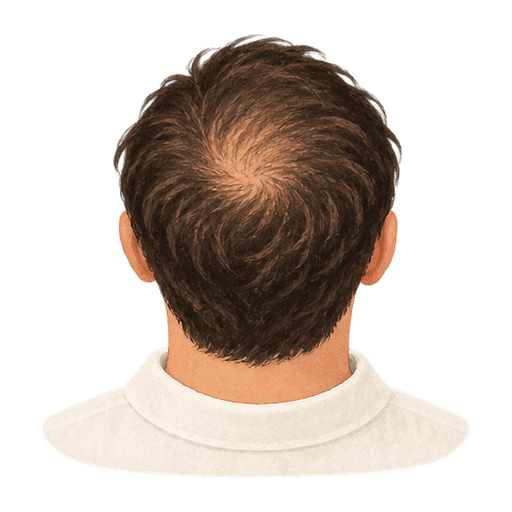
What it costs you depends on the area. Clinics quote you a price based on your photos.
Which area bothers you most?
One tap is enough, then you move on to your photos.



Your name stays with you until you choose a clinic.
Start without choosingWhat the price usually includes, and what it doesn't
Two offers with the same amount can mean very different things. So always ask what exactly the fixed price covers. Roughly, the items fall into these groups:
- Almost always included: the surgery itself with the planned number of grafts, and local anaesthesia.
- Often included, but not always: the preliminary examination, blood test, medication and care products for the first weeks, the first hair wash at the clinic, and for packages abroad also hotel and transfer.
- Often extra: PRP treatments, extra hotel nights, check-ups on site months later.
- Never included: the flight, your days off and trips to later check-ups.
Costs beyond the surgery
The fixed price is the biggest item, but not the only one. These belong in your calculation:
- Travel: the flight, and for treatment at home possibly a hotel and the journey. A companion often doubles the travel costs.
- Time off: many people plan about 10 to 14 days after the procedure, until scabs have fallen off and redness has faded. How long you can't work also depends on your job.
- Aftercare: check-ups in the months afterwards, for treatment abroad often by photo or video. If you prefer an in-person check-up locally, you usually pay for it yourself.
- Further treatment: if hair loss progresses, a second session or treatment with medication may come into question later. It's best to discuss this with the clinic early.
Hair transplants: why is Turkey cheaper than Germany?
Turkey is a global hub for hair transplants. The price gap versus Germany or Switzerland mainly reflects economics — not automatically lower medical quality:
- Cost of living & salaries: staff, rent, and equipment are significantly lower.
- Focus on international patients: many clinics mainly treat patients from abroad and bundle surgery, hotel and transfer into packages.
- The risk: the boom means Istanbul has a great many providers, and quality varies widely. That makes it all the more important to compare offers and have the clinic confirm the doctor, method and services before you book.
So a lower price doesn't automatically mean lower quality, but it doesn't guarantee good quality either. What matters is the choice of the individual clinic.
The price trap: 4 hidden costs to watch for
With very cheap offers, such as “unlimited grafts” for a flat price, it pays to ask exactly what is included. Get written confirmation before you book:
- Medication and care products: are lotions and shampoos for the first weeks included in the price?
- Blood tests and anaesthesia: are the blood test and local anaesthesia included?
- PRP: some clinics offer a treatment with your own blood plasma. Is it included or charged extra?
- Aftercare: is there a fixed contact person for the months after surgery, and does it cost extra?
Does health insurance pay?
For hereditary hair loss, usually not. Statutory health insurers in Germany treat a hair transplant in this case as a cosmetic procedure. Private insurers usually don't pay either, but that depends on your policy.
There can be exceptions if the hair loss has a medical cause, for example after an accident, a burn or surgery. Check with your insurer beforehand whether they cover anything, ideally in writing.
Payment, deposit and cancellation
Before you fix a date, you should know the terms. Ask the clinic specifically:
- Is a deposit due, how much is it, and when do you get it back if you cancel?
- When and how do you pay the rest, for example on site, by bank transfer or by card?
- What happens if, after the examination on site, the clinic plans a different number of grafts than in the offer?
- Until when can you postpone or cancel free of charge?
Get the answers in writing. You sign the contract directly with the clinic.
How to compare two offers
The lower price is not automatically the better offer. Put the offers side by side and go through these points:
- Graft range: do both plan roughly the same amount? If one clinic differs a lot, ask why.
- Who operates: does a doctor perform the key steps personally, such as opening the channels?
- Procedures per day: how many patients does the team treat in one day?
- Included: medication, aftercare, hotel, transfer, interpreter. Add up any missing items.
- Aftercare: who is there for you in the months afterwards, and how?
Offers you can actually compare
On Trichio all clinics reply in the same format: a cost estimate for the listed services, the planned graft range, method, who operates and what is included, such as hotel or transfer. That way you compare estimates that really mean the same thing. A price only becomes binding after the examination at the clinic.
How to get your cost estimates
- Answer a few questions and upload four photos
- Get up to three cost estimates from partner clinics
- Compare calmly, without any clinic knowing your name