Recovery after a hair transplant
From day one to the result after about a year: what's normal in each phase, what to look out for and when you need medical advice.
Key points
- In the first two weeks the skin heals: redness, scabs, sometimes swelling on the forehead. After about 10 to 14 days the scabs are usually gone.
- Between weeks two and eight, many transplanted hairs fall out. This is normal; the follicles stay in the skin.
- New hair grows from about month three to four. You see the result after about twelve months, on the crown sometimes only after 18.
The course at a glance
Every body heals a little differently, and every clinic gives its own instructions. As a rough guide:
| Period | What happens | What you do |
|---|---|---|
| Days 1 to 3 | redness, small scabs, sometimes swelling of forehead and eyes | keep your head raised, don't touch the areas, follow the clinic's instructions |
| Days 4 to 14 | scabs come off, the skin often itches | wash gently as shown, don't scratch |
| Weeks 2 to 8 | many transplanted hairs fall out (shock loss) | wait, this is normal |
| Months 3 to 4 | first new, fine hairs | be patient, sometimes small pimples |
| Months 6 to 9 | hair gets denser and stronger | first review with the clinic |
| Months 12 to 18 | largely the final result | final check-up |
The first days
Right after surgery the donor and recipient areas are red and sensitive. Small scabs form around the grafts in the recipient area. The clinic usually gives you a painkiller; many only need it briefly.
Between days two and four, some people's foreheads swell, sometimes down to the eyes. This comes from the anaesthetic fluid and usually goes away by itself after a few days. Many find it helps to keep the head slightly raised.
During this time the grafts are not yet firmly anchored. Don't touch the area, don't scratch and avoid pressure, for example from tight caps or helmets.
Want to know what is realistic for you? Clinics look at your photos and reply with a plan.
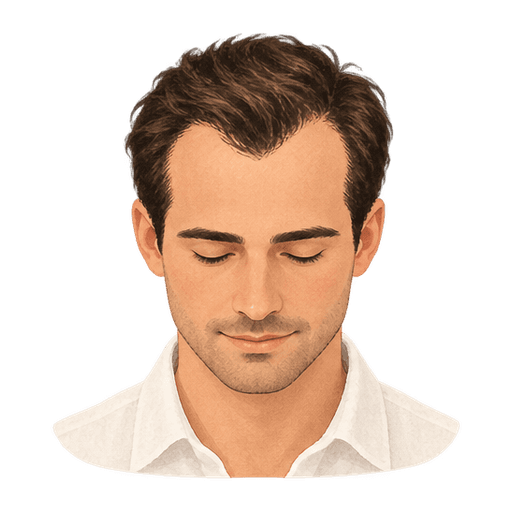
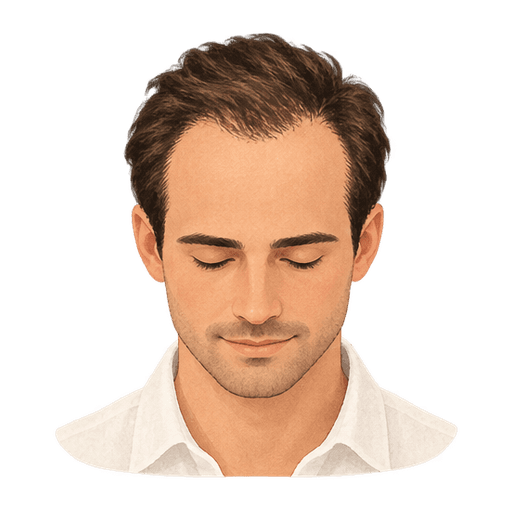
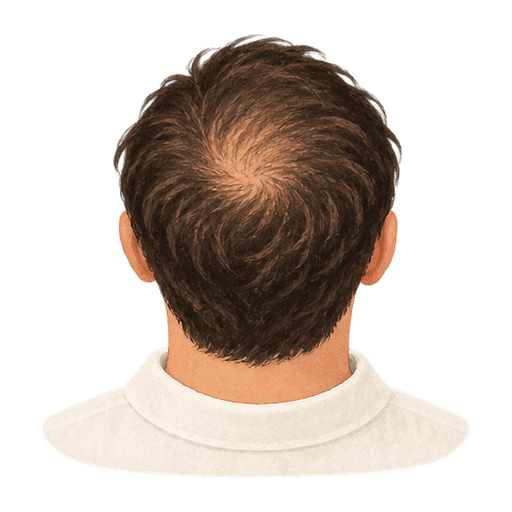
Which area bothers you most?
One tap is enough, then you move on to your photos.
Your name stays with you until you choose a clinic.
Start without choosingWashing your hair and scabs
The first hair wash is often done by the clinic itself, usually after one to three days. After that you wash according to their instructions, usually gently with a special lotion or a mild shampoo, without rubbing.
The scabs come off gradually and are usually gone after about 10 to 14 days. Don't pull them off, even if it itches. When they come off, a hair sometimes comes with them. That's normal; the follicle stays in the skin.
Shock loss: when the new hairs fall out
Between weeks two and eight, most people lose many of the transplanted hairs. It's alarming, but a normal part of healing: after transplanting, the follicles enter a resting phase and shed the old hair.
Sometimes existing hair around the treated area falls out temporarily as well. This usually grows back too. For a few weeks the area may therefore look thinner than before surgery.
When the new hair grows
From about month three to four, the new hairs start to grow, fine at first and sometimes slightly curly or lighter. Over the months they become thicker and stronger.
In this phase small pimples can appear as a hair makes its way through the skin. These are usually harmless. If they get larger, painful or numerous, show them to the clinic or a doctor.
After about six months many people already see a clear difference. The final result shows after about twelve months. On the crown it often takes longer, sometimes up to 18 months.
Work, sport and everyday life
Your clinic will tell you when what is possible again. Recommendations differ; many clinics suggest roughly the following:
- Work: office jobs are often possible again after a few days. If you don't want to show redness and scabs, plan about 10 to 14 days. Physical work can take longer.
- Sport: light exercise usually after about a week, sweaty sport and weight training often only after a few weeks.
- Sun, sauna and swimming: avoid them in the first weeks. A loose-fitting head covering protects against the sun once the clinic allows it.
- Smoking and alcohol: smoking worsens blood flow and can impair healing. Many clinics advise avoiding it around the procedure.
- Haircuts: with scissors often after a few weeks. With clippers on the donor area usually only after about a month or later.
Warning signs: when you need medical advice
Contact the clinic and see a doctor near you if:
- the redness gets stronger after a few days instead of weaker,
- pus forms or the area weeps heavily,
- you develop a fever or feel unwell,
- the pain increases instead of easing,
- swelling doesn't go down after about a week.
Take the clinic's surgery report with you. It helps the doctor understand what was done.
And the donor area?
At the back of the head the small extraction sites usually heal quickly, often within one to two weeks. At first the skin is red; the redness fades over time.
Some people feel numbness or tingling at the back of the head or in the treated area for a few weeks to months. This usually resolves by itself.