Is my donor hair enough?
Every hair transplant only moves what you have at the back of your head. That supply does not grow back. How much it gives decides what is possible for you, especially with more advanced hair loss.

Key points
- The back of the head has 65 to 85 grafts per square centimetre. Taking about a quarter of them carefully gives roughly 2,000 to 3,600 grafts, depending on the size of the area.
- Up to moderate hair loss this is usually enough. With advanced hair loss you often need more than the scalp gives when harvested carefully.
- If too much is taken, the back of the head looks patchy. Beard hair can extend the supply.
Not medical advice
Trichio is a comparison site, not a medical practice, and we are not doctors. This guide provides general information and does not replace a medical examination or advice. Whether and which treatment is right for you is something to clarify with a doctor. All information without guarantee.
What the donor area is
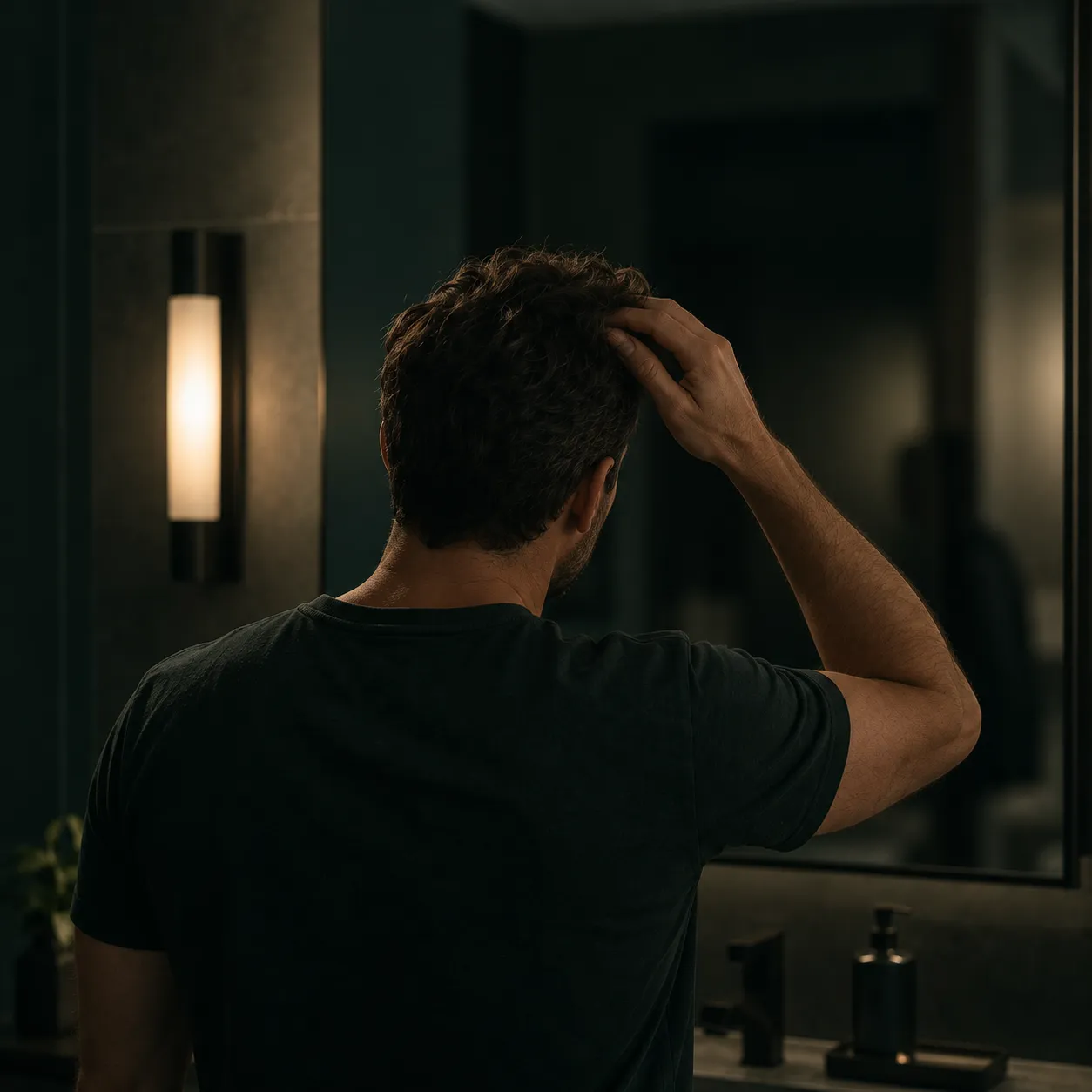
For a hair transplant, hair is taken where it usually stays with hereditary hair loss: at the back and sides of the head. What is taken are grafts, small groups of usually 1 to 4 hairs. Because these hairs are resistant to the hair loss, they keep growing in their new place.
Studies count between 65 and 85 grafts per square centimetre there, or 124 to 200 hairs. In men from East and Southeast Asia the density is somewhat lower on average, at around 61 grafts.
How much can be taken
Take too many grafts from one area and it looks thin or patchy afterwards. That is why studies calculate carefully. One study of 580 men measured the density and calculated how many grafts can be gained when 25% are taken. “Small” means only the safe core at the back, “extended” reaches towards the sides.
| Donor area | Grafts at 25% harvest |
|---|---|
| small | about 2,100 |
| standard | about 3,100 |
| extended | about 3,600 |
| beard, in addition | about 800 |
The figures come from India. The measured density of 78 grafts per square centimetre is right in the range studies also report for Europeans.
Important: this is your supply for life. What is taken today is missing for a later second session. Specialists therefore advise planning so that something is left if hair loss continues.
Real offers show how many grafts a clinic plans for you.
Which area bothers you most?
One tap is enough, then you move on to your photos.
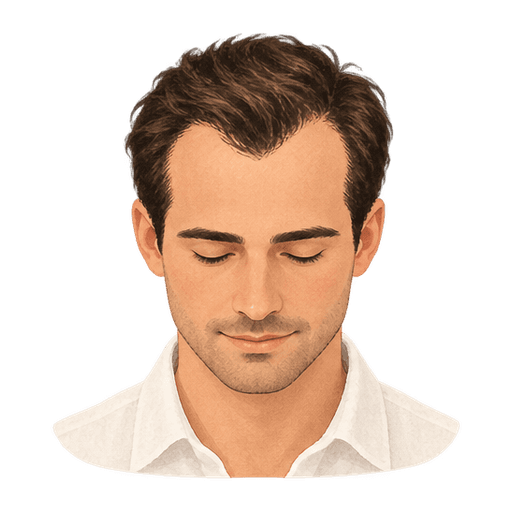
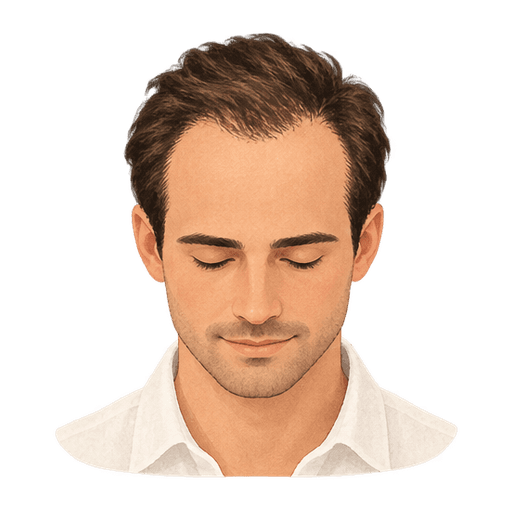
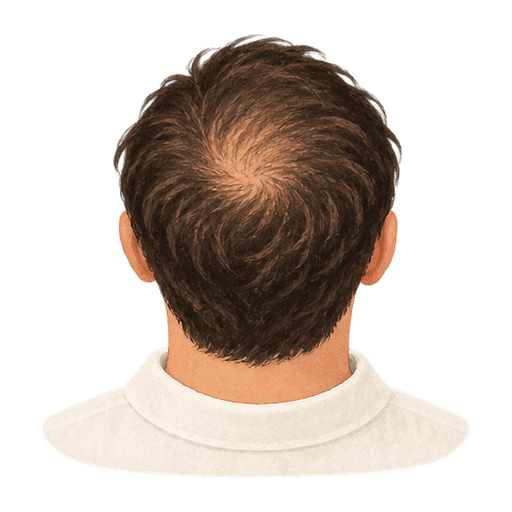
Your name stays with you until you choose a clinic.
Start without choosingHow much you need
Our graft calculator gives typical ranges for each stage of the Norwood scale. Put them next to the supply on the scalp and you can see where it gets tight.
| Norwood stage | typical need | fits the scalp supply (2,100–3,600)? |
|---|---|---|
| 2 | 800–1,500 | yes, with reserve |
| 3 | 1,500–2,500 | mostly yes |
| 4 | 2,500–3,500 | tight, little reserve |
| 5 | 3,500–4,500 | at the limit or above |
| 6 | 4,500–5,500 | usually more than the scalp gives safely |
| 7 | 5,500–7,000 | clearly more |
This is a rough comparison. What is possible for you depends on density, size of the donor area, hair thickness and hair colour, and can only be determined in an examination.
If it is not enough
With advanced hair loss there are several options, often combined:
- Set priorities: hairline and front first, the crown later or not at all. A dense front looks better than an evenly thin area.
- Beard and body hair: in a study of 36 men with Norwood 5 to 6, an average of around 2,350 beard grafts were added to 3,100 from the scalp, and about 96% grew. Beard and body hair grow differently, though, and do not suit every spot.
- Medication: it is meant to stop hair loss from progressing so the need does not keep growing.
- Adjust expectations: in a study of 820 men with severe hair loss, 94% were satisfied after 12 months, but 62% wanted another session for more coverage or density.
Warning signs in an offer
- Very high graft numbers for early hair loss: being offered 5,000 grafts at Norwood 3 uses up supply you will miss later.
- “Unlimited grafts” or “as many as possible”, without saying how many the donor area can give.
- No assessment of the back of the head before the offer. Photos are enough for a rough estimate, but density cannot be measured from them.
- No plan for later: ask how much donor hair will be left after the operation.