Hair transplant for Afro-textured and curly hair
Tightly curled hair is curved under the skin as well. That makes extraction harder and calls for experience and suitable tools. At the same time, curly hair visually covers more. What you should know.

Key points
- With tightly curled hair, the root is curved under the skin. Standard FUE needles often damage roots as a result.
- In a small case series, standard rotary needles failed in almost half of patients. A curved special needle achieved under 5 % damaged grafts.
- Ask specifically about experience with tightly curled hair and about any tendency to raised scars.
Not medical advice
Trichio is a comparison site, not a medical practice, and we are not doctors. This guide summarises studies in general. It is not medical advice. What is right for you is something to discuss with a doctor.
What is different with tightly curled hair
With straight hair, the root grows fairly straight into the skin. With tightly curled hair, it is curved under the skin too. Extracting with a straight hollow needle cuts the root more easily. A review of hair restoration in curly hair names this as a central challenge, alongside grooming habits that can affect hair loss.
A study from South Africa also measured that hair density in Afro-textured hair is lower on average than in other groups. That affects how many grafts can be extracted.
Extraction: tools and experience
In a small case series of 18 patients with tightly curled hair, standard rotary needles failed completely or damaged too many grafts in 8 patients. A curved, non-rotating special needle achieved under 5 % damaged grafts in all of them. The study comes from the practice that developed the needle, so the results should be read with caution.
Some clinics also use the strip method FUT for tightly curled hair, because the grafts are divided under the microscope.
Ask the clinics in your offer about their experience with your hair type.
Which area bothers you most?
One tap is enough, then you move on to your photos.
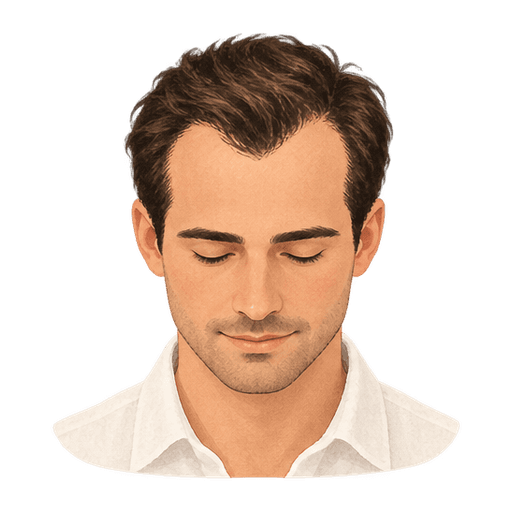
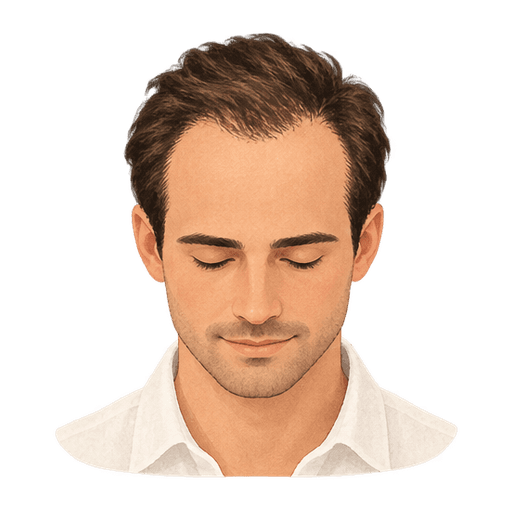
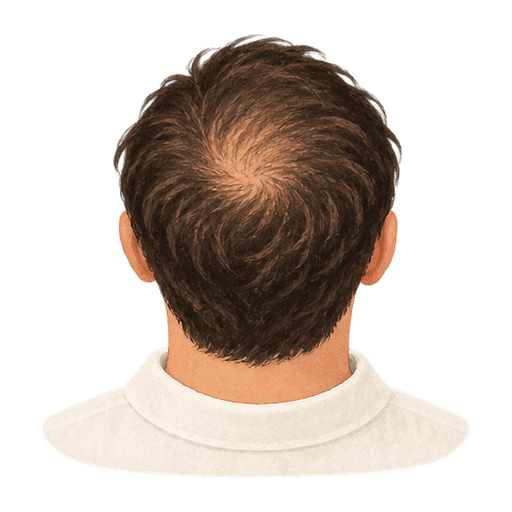
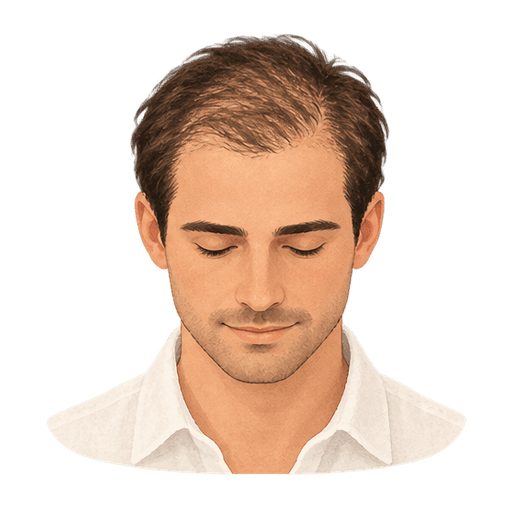
Your name stays with you until you choose a clinic.
Start without choosingThe advantage of curly hair
Curly hair stands away from the scalp and overlaps. With the same number of grafts it therefore often looks denser than straight hair. How much area your donor hair can cover depends on your density, though, and can only be judged in an examination.
Clarify the cause
Not every hair loss is hereditary. In people with Afro-textured hair, hair loss from tension, for example from tight braids or extensions, and certain scarring forms also occur. With some of these, a transplant is only possible to a limited extent. Have the cause checked by a dermatologist first.
What to ask the clinic
- How often does the team operate on people with tightly curled hair? Are there photos?
- Which needles or which method do you use for my hair type?
- What share of grafts is damaged, and is it documented?
- Have you ever had raised scars or keloids? Tell the clinic; it affects the method.